TOFU, MOFU and BOFU: How Small Businesses Can Use Funnel Marketing in SEO

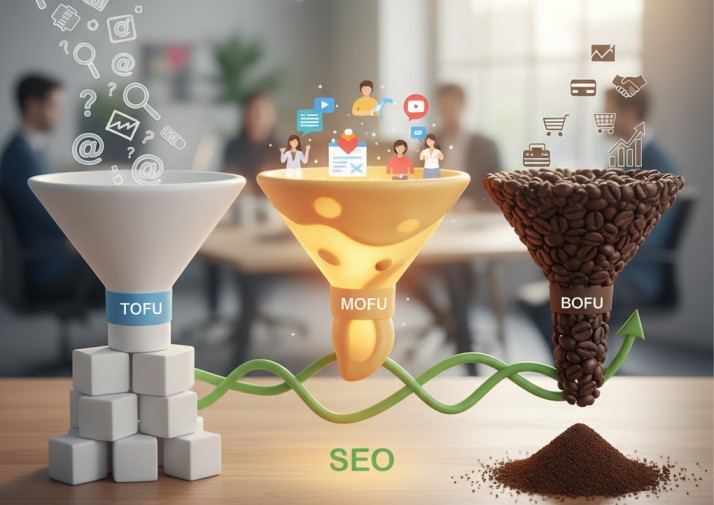
The SEO funnel aligns the buyer’s journey with search intent: TOFU (top-of-funnel) is Awareness, MOFU (middle-of-funnel) is Consideration, and BOFU (bottom-of-funnel) is Decision. In reality, what is BOFU? BOFU” stands for keywords pertaining to the buying intent, such as “hire” and “pricing”. When taken together, TOFU MOFU BOFU in SEO is a concept of aligning content with a searcher’s point position.
When targeting content to each stage, it ensures that marketing is purposeful, making it more likely to drive conversions for small business SEO. This is important because any small business budget requires the maximum return on all marketing dollars. In 2026, a well-crafted SEO funnel will no longer waste funds and boost the conversion rates of campaigns in general; it will also need to understand and consider where those clicks are happening as a result of the change in search behavior with AI.
What Is the SEO Funnel? Understanding TOFU, MOFU and BOFU
Definitions
TOFU (Top-of-Funnel) = Awareness Stage: They’re in the biggest group, and they’re just beginning to understand what they need or issue they have. They desire informational content and general information. TOFU prospects have no knowledge of your business, they’re just researching a problem.
MOFU (Middle-of-Funnel) = Consideration Stage: Prospects at this stage are researching solutions and alternatives. They understand their problem and are researching how to solve it. When using MOFU content, prospects can get a realistic picture of the position your solution occupies in the mix of options and the reasons why it is a viable option for their situation.
BOFU (Bottom-of-Funnel) = Decision/Conversion Stage: These prospects are ready to buy and they’re looking for details about the cost, implementation, and what comes next. Leaders of BOFU are already deciding on which solution to select and now they are comparing specific vendors or service providers.
How Buyer Intent Shifts Across Stages
Informational Intent (TOFU): Prospects search for how-to, problem definition, or general education. They pose questions such as “what is” or “how does” concerning what they are learning and engage in search behavior that is more focused on learning and less on purchasing. At this point, bounce rates are generally high as consumers are consuming information across various pages and sources to make sense of it, but not yet ready to take an action step.
Commercial Intent (MOFU): These types of search queries contain words and phrases such as comparison terms like “vs”, “best”, “reviews”, and “alternatives”. More time is spent considering other options here. They download resources, sign up for newsletters, and interact more with the content that assists them with comparing solutions.
Transactional Intent (BOFU): Search terms include “price,” “cost,” “buy,” “hire,” and location-specific modifiers. These prospects are chomping at the bit to make contact or a purchase decision. They seek specific service information, pricing information and a clear, low friction pathway to the first step.
The SEO Funnel in 2026: How AI Search Changes TOFU, MOFU and BOFU
The classic funnel model still holds, but 2026 changes where the clicks actually land. Most single-fact, informational TOFU queries are now picked up straight in the answer, such as “what is TOFU MOFU BOFU” or “how does an SEO funnel work” before the user ever even arrives at a website, thanks to AI Overviews. Note that TOFU content isn’t bad, but it’s not for the same purpose.
What’s shrinking: Pure definitional TOFU content that’s only created for clicks. When the AI answer engine can answer the question completely in its summary, a generic “what is X” article is more likely to get cited than to get clicks.
Where the weight is shifting:
- AI Overviews are not taking the place of comparison content, but they are doing a better job of directing users to more comparison content, since it’s usually what they need to take the next step in their research, which is opinionated: “which is actually better for my situation?”
- BOFU intent matters more than ever, since the traffic that does still click through skews toward people close to a decision, not casual browsers.
- Brand becomes a funnel stage in its own right. Earning that click that once came solely from ranking is now part of the process of being named the answer or recommendation in an AI answer engine.
GEO and AEO guidance for funnel content: Structure funnel content to answer one specific question in two or three sentences followed by more expansion and then include a header that reflects the actual question(s) people use, and back claims with numbers, named sources, or specifics that can be verified as opposed to generalities. This applies at every stage: A TOFU definition page, a MOFU comparisons table, and a BOFU pricing page can be written to be quoted directly by the AI Overview, not only indexed by it.
Practically, this means your SEO funnel 2026 strategy isn’t just limited to the number of keywords anymore. It’s worth looking into whether any of your pages have earned mentions in AI responses to TOFU MOFU BOFU ai searches about your company, and doubling down on that format.
Why TOFU-MOFU-BOFU Matters for SEO & Small Business Services
Aligning Content with Funnel Stages Avoids Wasted Effort
Content that’s not tailored to a buyer’s stage results in a failure to match expectations and poor conversion rates. TOFU prospects are not ready to sell to. BOFU prospects don’t need their primary education on their issue. Having intent and content aligned helps people with better user experience, helps with ranking, and makes the prospect stay engaged and continue moving towards conversion.
Better Keyword Targeting by Funnel Stage
TOFU Keywords: Focus on high-volume search and educational queries. These draw in new visitors.
MOFU Keywords: Use comparison and evaluation terms that reflect active consideration. These typically carry moderate competition and moderate conversion potential.
BOFU Keywords: Target high-intent, business-focused keywords with clear buying signals. These usually carry low volume but very high conversion.
Maximizing Limited Small Business Budgets
Competing on competitive commercial terms on Google is typically difficult for small businesses to do, compared to enterprise budgets. TOFU content is a more cost-effective entry into competitive markets. Educational content is a strategy that creates sustainable competitive advantage without ongoing ad investment – and it helps boost rankings at all stages of the funnel over time. Additionally, a well-crafted funnel can help reduce your customer acquisition costs by engaging prospects through several touchpoints until they’re ready to purchase.
Higher Conversion, Lower CAC Benefits
TOFU generates the highest volume of leads but the lowest conversion rate, while BOFU generates a significant number of leads, but with a much higher conversion rate. Knowing this will enable you to make a responsible allocation of your resources. Companies that engage in bottom-of-the-funnel marketing often have less meaningful conversion rates than those that nurture prospects through the middle part of the funnel, meaning that a company that nurtures its MOFU customers will likely convert at BOFU at a much higher rate than a company that lets a cold visitor land on a pricing page.
Content & Keyword Strategy by Stage
| Funnel Stage | Search Intent / Query Type | Best Content Formats | Keyword types / Examples | Where to host it or how to distribute |
| TOFU | Problem awareness, “how/what” | Blog posts, infographics, educational guides, video explainers | “What is TOFU MOFU BOFU”, “SEO basics for small business”, “how to drive traffic” | Company blog, YouTube, social media, guest posts |
| MOFU | Solution discovery, comparisons, “vs”, “best”, etc | Comparison posts, case studies, webinars, and email sequences | “Small business SEO packages vs in-house”, “best SEO tools for local business” | Website specials, landing pages, retargeting, email campaigns |
| BOFU | Buying/contracting service, call to action, pricing, demos | Free trials, service listings, consultation pages, testimonials | “SEO services cost for small business”, “hire local SEO agency”, “SEO service pricing” | Service pages, contact/quote pages, targeted PPC & retargeting ads |
Small Business SEO Services: Structuring with TOFU-MOFU-BOFU
Audit + TOFU Content Plan
Start by researching the keywords your target customers actually use for informational queries. Produce detailed guides that address your business’s core problem areas. Build a weekly blogging plan around a mix of TOFU keywords, focused on providing real value rather than just marketing your services.
Organize topics into clusters built around themes central to your business. This builds topical authority and helps Google recognize your specific areas of expertise.
MOFU Services: Lead Nurturing and Comparison Content
Develop comparison content that lays out different solutions honestly, without being overly promotional. Cover the genuine advantages and disadvantages of each alternative. Build email opt-in sequences that gradually introduce your services while staying educational throughout.
Run monthly webinars or virtual events to position your business as an expert while building real relationships with prospects.
BOFU: Conversion-Focused Content and Offers
Build service pages that clearly outline what you offer, including pricing and value propositions, with strong calls-to-action and visible contact details. Prepare case studies that showcase results achieved with similar businesses, backed by real metrics and testimonials wherever possible.
Develop time-sensitive offers or consultations that give prospects a reason to act now, rather than researching endlessly.
Example: Local Landscaping Business Content Calendar
TOFU Content: “Best plants for [local climate],” “Landscape maintenance seasonal checklist,” “How to design outdoor spaces.”
MOFU Content: “DIY vs professional landscaping costs,” “Choosing the right landscaping contractor,” “Landscaping project timeline guide.”
BOFU Content: “Landscaping services pricing,” “Free landscape design consultation,” “Before/after project gallery with testimonials.”
Monthly themes could focus on seasonal landscaping needs, maintenance tips, and project inspiration, all with clear pathways toward your services.
What Tools and Services Support Building BOFU Comparison and Alternatives Content?
Comparison and “alternatives” pages, the classic BOFU SEO content, are usually built with a mix of competitor research tools to find what to compare against, structured comparison templates, and review or testimonial aggregation, not just a writer and a blank page.
Good BOFU content starts with competitor research. Tools like Ahrefs or SEMrush bring up pages such as “Company X vs Company Y” or “Best alternatives to Company X” which are pages that your prospects are looking for and comparing you against, not just the ones that you think they are looking for/comparing with.
Beyond that, it’s not so much a specific tool but rather a repeatable comparison template that is important. The best pages at this point of the funnel (BOFU SEO) will have a consistent structure on each page, as prospects at this stage are focusing on eliminating options rather than adding them: a feature-by-feature table, up-front pricing, and an honest “who this is not for” section.
Testimonial and review aggregation services, such as Trustpilot, G2, or even a good review list stored in a spreadsheet (which you’ve been diligently collecting), bring the social proof to the process of closing the gap between “this sounds good on paper” and “I’m ready to reach out. A comparison page with a live chat component or short form contact page works better here than a long form lead page, as BOFU visitors have already thought about buying the product, they simply need a quick next step.
How to Measure Success at Each Stage
TOFU Metrics: Building Awareness
Traffic Growth: Monitor organic search traffic increases for targeted informational keywords. Track new user acquisition and geographic reach expansion.
Engagement Indicators: Measure time on page, pages per session, and bounce rate for educational content. Higher engagement suggests stronger content relevance.
Brand Awareness: Track direct traffic growth, branded search volume, and social media mentions as signs of growing brand recognition.
MOFU Metrics: Nurturing Interest
Lead Generation: Monitor email signups, content downloads, webinar registrations, and other engagement actions that indicate growing interest.
Content Performance: Track which comparison guides and educational resources generate the most engagement and lead to further interactions.
Nurture Effectiveness: Measure email open rates, click-through rates, and progression through your nurture sequences.
BOFU Metrics: Driving Conversions
Conversion Rates: Track contact form submissions, phone calls, consultation bookings, and other actions indicating purchase intent.
Sales Metrics: Monitor cost per acquisition, average deal size, and customer lifetime value across different traffic sources and content types.
ROI Analysis: Calculate the return on your funnel marketing efforts by tracking revenue generated from each stage.
Tools & Technologies for TOFU-MOFU-BOFU Execution
Keyword Research Tools
For All Stages: Use Google Keyword Planner for search volume data, and SEMrush or Ahrefs for competitive analysis and keyword difficulty scores.
TOFU Focus: Use Answer the Public for question-based keywords and Google Trends for topic interest over time.
MOFU/BOFU Focus: Use SpyFu for competitor commercial keywords and local SEO tools for location-based searches.
AI Visibility and GEO Tools
In addition to the keywords, 2026 will feature a new category of tools to monitor: AI-visibility tools such as Profound or Otterly.AI, and Ahrefs’ Brand Radar feature, which tell you if your content is being cited or not in AI Overviews and chatbot answers.
They coexist with the usual keyword tools, but they are proving to be especially helpful for getting insight into where you’re getting citations, not only where you’re ranking. They are also becoming a more powerful tool for understanding MOFU and BOFU pages.
Content Planning and Management
Editorial Calendar Tools: Use CoSchedule, Trello, or Asana for content planning and team coordination across all funnel stages.
Content Creation: Use Canva for visual content, Loom for video tutorials, and WordPress or a similar CMS for blog management.
Marketing Automation for Lead Nurturing
Email Platforms: Use Mailchimp, ConvertKit, or ActiveCampaign for automated nurture sequences and segmentation by funnel stage.
CRM Integration: Use HubSpot, Pipedrive, or a similar tool to track prospects as they move through your funnel.
Analytics and Optimization Tools
Performance Tracking: Use Google Analytics 4 for full funnel analysis and Google Search Console for SEO performance monitoring.
Conversion Optimization: Use Hotjar or Crazy Egg for user behavior analysis, and a testing tool for A/B testing landing pages and content.
Common Mistakes & Pitfalls Small Businesses Make
Treating All Content Like BOFU
While many small businesses skip over current sales, they make a mistake by not first creating awareness and trust. This type of method disenfranchises prospects that are not ready to buy. Educating and providing TOFU prospects with value before their sales journey begins is necessary for a positive brand impression, or else they won’t consider your services.
Neglecting MOFU Lead Nurturing
Businesses often capture leads but fail to nurture them through the consideration stage, which results in lower conversion rates and longer sales cycles. Effective MOFU nurturing can help establish trust and make your business the next obvious step when prospects are ready to purchase, setting the stage for a successful sales funnel.
Poor Keyword Intent Matching
It’s not only frustrating for searchers, but it’s also bad for SEO and rankings to use high commercial intent keywords on educational content. Similarly, when it comes to informational keywords on service pages, you’re not going to get conversions since your search intent isn’t being met.
Mobile and Page Speed Issues
Technical issues impact each stage of the funnel, however they do have a significant impact on TOFU content items because users are not willing to wait for slow loading pages. Mobile optimization is key, as the majority of local searches are conducted from mobile devices and a bad mobile experience can ruin the chances of funnel conversion before it ever gets to the finish line.
Weak or Missing Calls-to-Action
When there are no clear next steps at each funnel stage, there are lost opportunities. The content of TOFU should direct to MOFU and MOFU should direct to BOFU. When there are no conversion signals at BOFU, ready prospects have no way to easily act quickly, which, naturally, has an impact on sales.
Frequently Asked Questions
What do TOFU, MOFU, and BOFU stand for in marketing?
TOFU means Top-of-Funnel (awareness), MOFU means Middle-of-Funnel (consideration), and BOFU means Bottom-of-Funnel (decision/conversion).
Do I need TOFU content if I already have a service page?
Yes. TOFU visitors are visitors who are not familiar with you. Service pages can only attract people who already know about your business.
How many keywords should I target per funnel stage?
Begin at each stage with 5 to 10 keywords, with the most relevant to your business. No need for quantity; quality and relevance are better.
How long does it take to see results from TOFU content?
It can take about 3-6 months for TOFU content to kick into the search engine, although some social media and direct traffic may yield results sooner.
Should small businesses focus more on BOFU or TOFU?
Balance both. BOFU captures ready buyers, while TOFU builds long-term authority and attracts future customers at a lower cost over time.
When is it okay to push sales content vs educational content?
For TOFU and early MOFU, it’s best to provide educational content. If the sales content is designed for late MOFU and BOFU stages, it will be perfect when users are actively considering buying an option.
How do I know if a lead is in MOFU vs BOFU?
MOFU prospects ask comparison questions, download guides. Either BOFU prospects ask about the pricing, availability and implementation details.
How much should a small business budget for MOFU content and email nurturing?
Budget about 20-30% of your content marketing budget to MOFU efforts, such as email automation and lead nurturing content.
What’s the biggest mistake small businesses make with funnel marketing?
Skipping stages, or using the wrong content for the wrong stage. If you’re having trouble putting together a funnel strategy that links these three stages effectively, it’s worthwhile to get the help of marketers who know how to create a cohesive funnel that actually transforms prospects into customers.
Conclusion
TOFU, MOFU, and BOFU marketing transforms how small businesses approach SEO and customer acquisition. When you correlate content to buyer’s intent at every stage, and now when you’re showing them how, you create marketing that leads prospects organically toward conversion. Trust and authority is created with the educational content, evaluation content is comparison content, and the sales is closed with conversion content.
This is a strategy that is most effective for small businesses as it can maximise a small budget and create a competitive edge that will endure. Avoid “pushing sales” and aim to make a real value at each stage. Establish TOFU first, create meaningful MOFU nurturing, and optimize BOFU conversion over time—while monitoring those pages that are being cited in AI search, not just ranked.
Funnel marketing is about relationships, not just rankings. When you help prospects in solving problems at all stages, you’re sure to be their preferred choice of business when they are ready to purchase.
Ready to implement a funnel-based SEO strategy that turns website visitors into paying customers? Start by auditing your current content with Vicious Marketing and identifying gaps in your buyer’s journey coverage.